

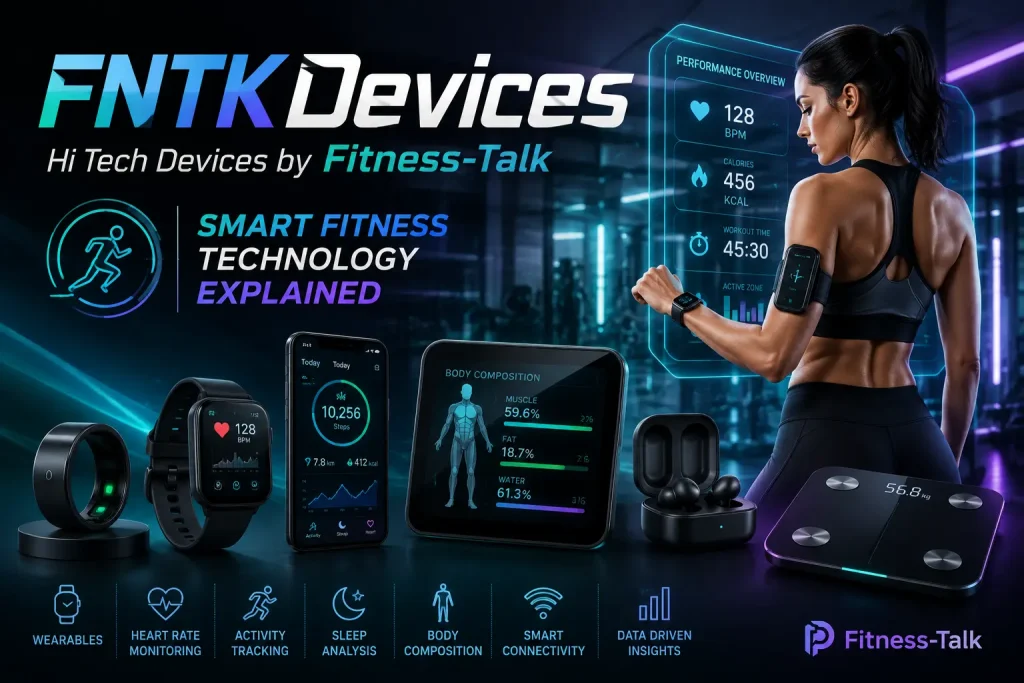
Technology has changed the way people approach exercise, recovery, sleep, and everyday health monitoring. Instead of relying only on a stopwatch, weighing scale, or handwritten workout plan, people can now use connected devices that collect fitness data throughout the day.
The phrase FNTKDevices hi tech devices by Fitness-Talk is commonly associated with this growing world of smart fitness technology. It covers the types of advanced devices that can help users monitor activity, understand workout performance, track recovery, and make more informed decisions about their fitness routines.
Modern fitness technology ranges from simple step trackers to sophisticated smartwatches, connected gym equipment, smart scales, recovery devices, and sensor-equipped wearables.
Understanding what these devices actually do is more useful than simply buying the newest gadget. Some provide valuable information, while others may include features that a particular user does not need.
What Are FNTKDevices Hi Tech Devices by Fitness-Talk?
FNTKDevices hi tech devices by Fitness-Talk can be understood as a broad category of modern technology designed around fitness, exercise, activity tracking, health monitoring, and workout improvement.
These devices may include:
- Fitness trackers
- Smartwatches
- Heart-rate monitors
- GPS sports watches
- Smart rings
- Smart scales
- Sleep trackers
- Connected exercise equipment
- Smart workout mirrors
- Recovery devices
- Wireless fitness sensors
- AI-powered fitness applications
What makes these products different from traditional exercise equipment is their ability to collect, process, store, or communicate information.
A normal watch tells the time. A fitness smartwatch may also monitor movement, estimate workout intensity, record routes, track sleep patterns, and display training statistics.
That added layer of data is what makes modern fitness technology so useful.
How Fitness Technology Has Changed Exercise
Fitness technology was once mainly used by professional athletes and sports scientists.
Today, wearable devices and connected fitness tools are widely available to ordinary users.
A person can now monitor an entire workout from their wrist.
Depending on the device, they may be able to see:
- Workout duration
- Distance covered
- Pace
- Steps
- Heart rate
- Estimated calories burned
- Training zones
- Elevation
- Recovery information
- Sleep duration
- Exercise history
This does not mean technology automatically creates better fitness results.
Instead, it gives users more information about what they are doing.
The real value comes from using that information consistently.
Main Types of FNTKDevices Fitness Technology
Not every fitness device serves the same purpose.
Some devices specialize in everyday activity tracking, while others are built for serious training, recovery, sleep, or body measurement.
Fitness Trackers
Fitness trackers are among the most recognizable wearable fitness devices.
They are normally worn around the wrist and designed to collect activity information throughout the day.
Common features may include:
- Step counting
- Distance tracking
- Activity reminders
- Heart-rate monitoring
- Workout modes
- Sleep tracking
- Estimated calorie expenditure
- Smartphone notifications
Fitness trackers can be useful for people who want an easy way to become more aware of daily movement.
For example, someone who works at a desk may discover that they are much less active during weekdays than expected.
That information can encourage simple changes such as taking walking breaks.
Smartwatches
Smartwatches combine fitness tracking with broader smartphone-style functionality.
In addition to exercise information, a smartwatch may provide:
- Calls and messages
- Calendar notifications
- Music controls
- GPS
- Workout applications
- Heart-rate information
- Sleep insights
- Navigation
- Contactless features
- Smartphone integration
For users who want one wearable for both daily life and fitness, a smartwatch can be more practical than purchasing multiple separate devices.
However, people who only need basic activity tracking may not require all of these additional features.
Smart Rings
Smart rings offer another approach to wearable health technology.
Instead of being worn on the wrist, these small devices are worn on a finger.
They can be particularly attractive to people who dislike sleeping with a watch.
Depending on the model, a smart ring may focus on:
- Sleep
- Resting heart rate
- Daily activity
- Recovery
- Stress-related trends
- Readiness information
Their discreet design is one reason smart rings have gained attention among users interested in continuous monitoring.
Heart-Rate Monitors
Heart-rate monitors are designed specifically to measure how hard the cardiovascular system is working.
They may be built into watches or worn separately.
Chest-strap heart-rate monitors are popular in training environments where consistent heart-rate readings are important.
Monitoring heart rate can help users understand different workout intensity levels.
For example, a runner may use heart-rate zones to separate easy endurance sessions from more demanding training.
GPS Fitness Devices
GPS technology is particularly valuable for outdoor exercise.
Runners, cyclists, hikers, and other outdoor athletes can use GPS-enabled devices to record movement.
Typical information can include:
- Distance
- Route
- Speed
- Pace
- Elevation
- Location
- Workout history
GPS tracking makes it easier to compare performances across repeated routes.
Instead of estimating how far someone ran, the device can create a much clearer record of the session.
Smart Scales
Traditional bathroom scales usually provide body weight.
Smart scales can collect additional measurements and synchronize results with an application.
Depending on the device, displayed information may include:
- Body weight
- Weight trends
- Body composition estimates
- Body mass index
- Muscle estimates
- Water estimates
The most useful feature for many users is not a single measurement but the ability to observe changes over time.
Daily measurements naturally fluctuate.
Longer-term trends often provide more meaningful information.
Sleep Tracking Devices
Sleep has become an important part of modern fitness technology.
Wearables may monitor movement and other signals while the user sleeps.
The accompanying software can then present information such as:
- Estimated sleep duration
- Bedtime consistency
- Wake time
- Nighttime interruptions
- Sleep stages
- Resting heart-rate trends
- Recovery patterns
Sleep-tracking information should generally be viewed as guidance rather than a perfect medical measurement.
Its biggest practical value may be helping users notice patterns in their routine.
For example, someone may see that their sleep duration drops significantly whenever they stay up late using their phone.
Connected Gym Equipment
Fitness technology is no longer limited to wearable devices.
Exercise machines can now connect to applications, online workout platforms, and performance dashboards.
Connected equipment may include:
- Treadmills
- Exercise bikes
- Rowing machines
- Strength systems
- Smart resistance machines
- Workout screens
These systems can make training more interactive.
Some can automatically record workout statistics instead of requiring the user to enter everything manually.
Smart Workout Mirrors
Smart fitness mirrors combine a display with guided workout technology.
When inactive, the device may resemble a normal mirror.
During exercise, it can display:
- Workout instructors
- Timers
- Exercise demonstrations
- Training programs
- Performance information
The concept allows people to create a guided workout environment without dedicating a large room to gym equipment.
Recovery Technology
Training is only one part of fitness.
Recovery technology is designed around what happens after exercise.
Common examples include:
- Massage devices
- Compression systems
- Muscle stimulation equipment
- Recovery wearables
- Mobility tools
- Temperature-based recovery devices
Some products focus on comfort and muscle relaxation, while others provide data intended to help users understand training readiness.
Recovery technology should complement sensible rest, nutrition, sleep, and training rather than replace them.
How FNTKDevices Work
Although fitness devices can look very different, many rely on a similar combination of components.
Sensors Collect Information
Sensors inside the device detect different types of movement or biological signals.
Depending on the product, these sensors may include:
- Accelerometers
- Gyroscopes
- Optical sensors
- GPS receivers
- Temperature sensors
- Pressure sensors
- Electrical sensors
A fitness tracker, for example, can use movement sensors to identify patterns associated with walking or exercise.
Software Processes the Data
Raw sensor information is not particularly useful to most people.
Software converts that information into understandable statistics.
Instead of displaying thousands of individual movement signals, the application may simply show:
8,420 steps today.
Algorithms can also identify patterns over time.
Apps Display the Results
Many devices synchronize with smartphone applications.
The application acts as a dashboard where users can review their information.
This might include:
- Daily activity
- Weekly trends
- Workout history
- Personal records
- Sleep information
- Fitness goals
- Recovery statistics
This relationship between hardware and software is one of the defining characteristics of modern fitness technology.
The Role of Artificial Intelligence in Fitness Devices
Artificial intelligence is becoming increasingly connected with consumer fitness technology.
Traditional fitness apps mainly displayed recorded data.
More advanced systems can analyze patterns and use them to provide personalized suggestions.
AI-powered fitness technology may be used for:
- Workout recommendations
- Exercise recognition
- Training adjustments
- Recovery suggestions
- Performance analysis
- Habit identification
- Personalized coaching
- Movement analysis
For example, an app might notice that a runner’s pace has increased over several weeks while workout heart-rate patterns remain relatively stable.
It may use those trends to adjust future training suggestions.
The important distinction is that AI does not physically improve fitness.
It helps interpret information that may otherwise be difficult for the user to analyze.
Why People Use Hi-Tech Fitness Devices
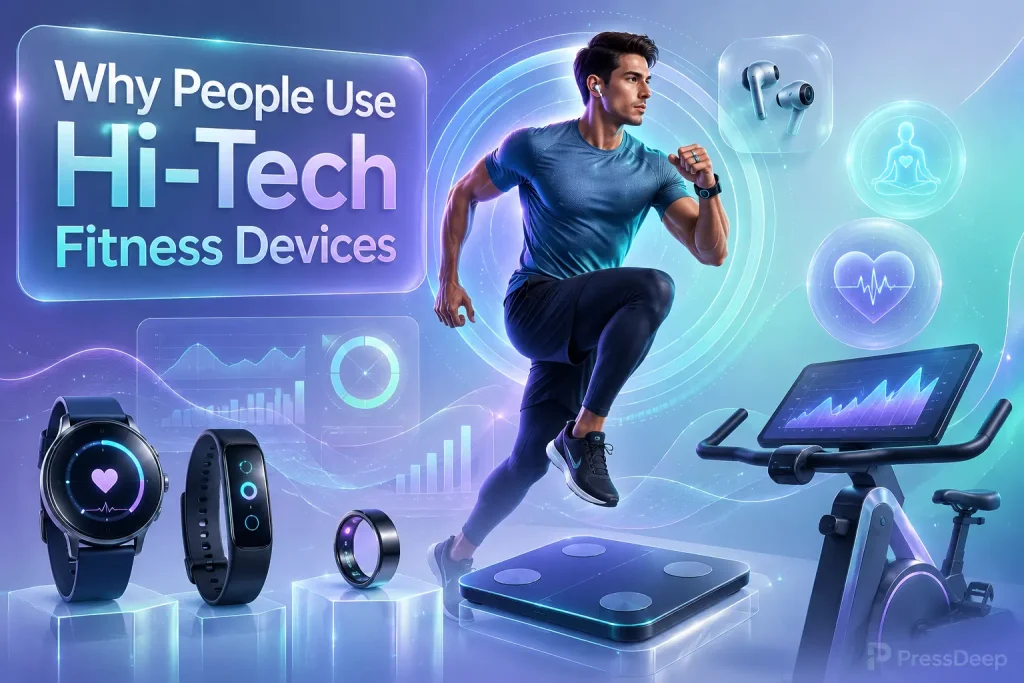
There is no single reason people buy fitness technology.
Different users benefit from different features.
Tracking Progress
Progress can be difficult to notice from one workout to another.
Technology creates a record.
A runner might compare their current performance with training completed three months earlier.
A walker might see that their daily activity has gradually increased.
The information gives users something measurable to follow.
Creating Accountability
A goal feels more concrete when progress is visible.
Instead of saying:
“I want to walk more.”
A tracker can turn that intention into something measurable.
The user can see whether daily movement actually increased.
Understanding Training Intensity
People sometimes exercise much harder or easier than they realize.
Heart-rate information, pace data, and workout duration can provide additional context.
This can help users develop more structured training routines.
Building Consistent Habits
Many fitness devices include reminders, streaks, challenges, or activity goals.
These features can encourage users to make movement part of their normal routine.
The device itself cannot create discipline, but it can make habits easier to observe.
FNTKDevices Comparison Table
| Device Type | Best For | Common Features | Main Advantage |
|---|---|---|---|
| Fitness Tracker | Everyday activity | Steps, heart rate, workouts | Simple daily tracking |
| Smartwatch | Fitness and daily use | Apps, GPS, workouts, notifications | Multiple functions in one device |
| Smart Ring | Sleep and recovery | Sleep, activity, recovery | Small and discreet |
| Heart-Rate Monitor | Structured training | Heart-rate data and zones | Focused workout information |
| GPS Sports Watch | Running and outdoor sports | Routes, pace, distance | Advanced outdoor tracking |
| Smart Scale | Body trends | Weight and composition estimates | Long-term measurement history |
| Sleep Tracker | Rest monitoring | Sleep duration and patterns | Better routine awareness |
| Connected Equipment | Home training | Guided workouts and performance data | Interactive workouts |
| Recovery Device | Post-workout use | Massage or recovery support | Convenient recovery tools |
Wearable Fitness Technology vs Traditional Fitness Equipment
Traditional fitness equipment and smart technology are not competitors in every situation.
They often work together.
| Traditional Equipment | Smart Fitness Technology |
|---|---|
| Mainly used for physical exercise | Tracks or enhances exercise |
| Limited data | Can collect extensive data |
| Usually works independently | Often connects to apps |
| Simple controls | Software-based features |
| Minimal personalization | May provide personalized information |
| Little long-term tracking | Stores historical performance |
A traditional dumbbell still performs its job perfectly without sensors.
Technology becomes valuable when users want information, guidance, tracking, or connectivity alongside the exercise itself.
Benefits of FNTKDevices Hi Tech Devices
Convenient Data Collection
One major advantage is automation.
Without technology, a runner might have to manually record:
- Start time
- End time
- Route
- Distance
- Pace
- Heart rate
A connected fitness device can collect much of this information automatically.
Long-Term Performance History
One workout provides limited information.
Months of recorded workouts can reveal trends.
Users may discover:
- Increased distance
- Improved consistency
- Faster pace
- Changing sleep habits
- More daily activity
- Different recovery patterns
This makes digital fitness technology particularly useful for long-term tracking.
Personalized Experience
Modern fitness platforms can adapt to individual information rather than giving every user exactly the same experience.
Two people using the same device may receive different suggestions based on their activity patterns.
Greater Workout Awareness
Technology can make exercise more measurable.
Users can better understand how different activities affect their performance.
This awareness can encourage smarter decision-making.
Limitations of Smart Fitness Devices
High-tech devices also have limitations.
Understanding them is important.
Measurements Are Not Always Exact
Consumer fitness devices estimate many metrics.
Different brands and sensors may produce slightly different results.
Users should avoid treating every number as perfectly precise.
Too Much Data Can Be Distracting
More information is not always better.
Some people become focused on hitting every target instead of enjoying exercise.
A device should support fitness rather than control it.
Battery Dependence
Smart devices need power.
GPS, bright screens, continuous monitoring, and wireless connectivity can consume battery quickly.
Traditional equipment has no such problem.
Subscription Costs
Some devices provide basic features with the purchase while placing advanced analytics behind subscriptions.
Buyers should consider ongoing costs before choosing a platform.
Privacy Considerations
Fitness devices can collect personal activity information.
Users should understand what information is stored and review available privacy settings.
How to Choose the Right FNTKDevice
The best fitness device is not necessarily the one with the longest feature list.
It is the device that solves the user’s actual problem.
Start With Your Fitness Goal
Ask what you want to measure.
For general activity:
A basic fitness tracker may be enough.
For running:
GPS and pace tracking may matter more.
For sleep:
Comfort and overnight battery life become more important.
For strength training:
Exercise recognition and workout logging may be more useful.
For recovery:
A device specializing in recovery trends might make more sense.
Check Device Compatibility
Some fitness devices depend heavily on smartphones.
Before buying, check compatibility with your preferred operating system and applications.
A powerful wearable loses much of its usefulness if the user’s phone cannot access important features.
Consider Battery Life
Battery requirements vary greatly.
Think about whether you are comfortable charging the device every day or prefer something that can operate for several days.
Battery life is particularly important for:
- Sleep tracking
- Hiking
- Long runs
- Travel
- Outdoor sports
Focus on the Features You Will Actually Use
It is easy to pay for unnecessary functions.
A user who only wants step counting does not necessarily need advanced GPS navigation.
Likewise, a serious endurance athlete may quickly outgrow a very basic tracker.
Match the device to the intended use.
Think About Comfort
Wearable technology only provides useful long-term information when people actually wear it.
Consider:
- Weight
- Strap material
- Size
- Screen dimensions
- Ring fit
- Comfort during sleep
- Comfort during exercise
Comfort can be more important than specifications.
Check Durability
Fitness devices may encounter:
- Sweat
- Rain
- Dust
- Impacts
- Temperature changes
People involved in outdoor or intense activities should pay attention to durability and water-resistance ratings.
Smart Fitness Devices for Different Users
Beginners
Beginners often benefit from simplicity.
Useful features may include:
- Step tracking
- Basic workouts
- Activity reminders
- Simple heart-rate information
- Easy progress charts
Too many advanced statistics can make the experience unnecessarily complicated.
Runners
Runners may prioritize:
- GPS
- Pace
- Distance
- Heart rate
- Interval workouts
- Route tracking
- Training history
Advanced runners may also want recovery and performance analysis.
Cyclists
Cyclists may benefit from:
- GPS
- Speed
- Distance
- Route navigation
- Heart-rate monitoring
- Sensor compatibility
- Elevation tracking
Gym Users
Gym-focused users may prefer:
- Strength workout tracking
- Timers
- Heart rate
- Exercise logging
- Workout plans
- Recovery information
People Focused on Sleep and Recovery
For these users, comfort may matter more than a large screen.
Important features can include:
- Overnight wearability
- Battery life
- Sleep trends
- Resting heart rate
- Recovery information
Can Fitness Technology Replace a Personal Trainer?
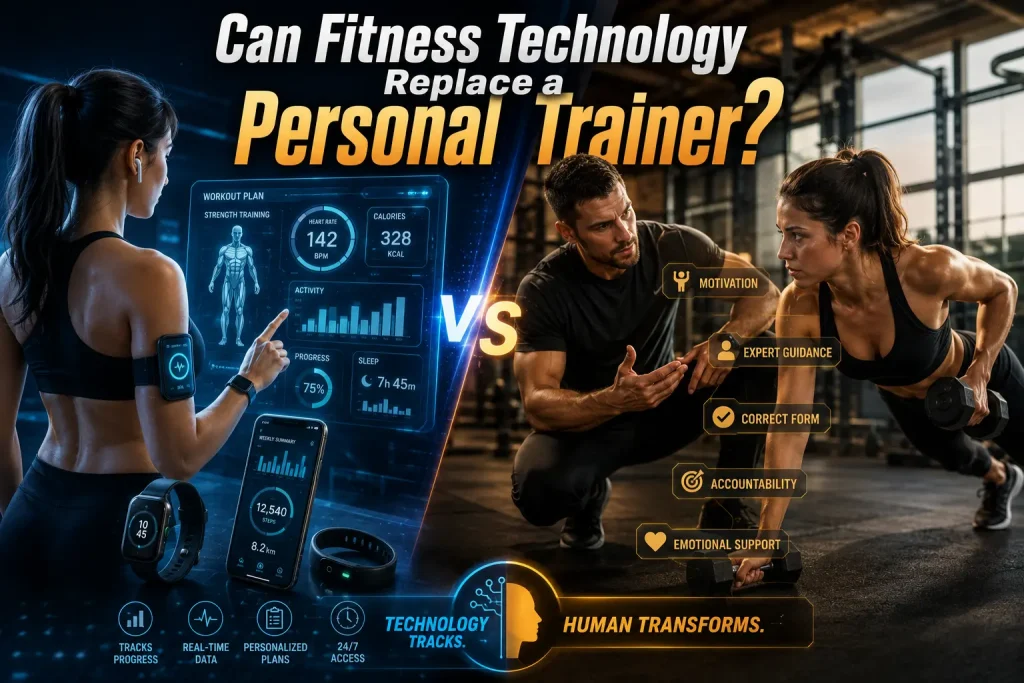
Fitness technology can provide information, reminders, structured programs, and basic coaching features.
However, it cannot completely reproduce everything a skilled human trainer provides.
A trainer can observe:
- Exercise technique
- Personal limitations
- Motivation
- Movement quality
- Real-time mistakes
- Individual circumstances
Technology is best viewed as a tool.
For many people, the strongest approach is combining useful technology with sound training principles.
Can Hi-Tech Devices Make You Fitter?
Simply owning a device does not improve fitness.
Results still depend on behavior.
A fitness watch sitting on a desk produces no training benefit.
Technology becomes valuable when the information leads to useful actions.
For example:
- The device shows low daily activity.
- The user notices the pattern.
- The user adds an evening walk.
- Activity becomes more consistent.
- Progress is reviewed over several weeks.
The device provides information.
The person creates the change.
Accuracy vs Consistency in Fitness Tracking
Many people focus heavily on whether their device produces a perfectly accurate number.
Absolute accuracy matters in certain situations, but consistency can also be valuable.
Suppose a device estimates the same type of workout every week using the same method.
Even if the measurement is not laboratory-perfect, changes in the trend can still help the user compare sessions.
This is why long-term patterns are often more useful than obsessing over one day’s result.
How Smartphones Work With FNTKDevices
Smartphones have become the central hub for many fitness devices.
Wearables collect data while companion apps organize and display it.
A smartphone application may provide:
- Graphs
- Workout histories
- Goals
- Trends
- Exercise plans
- Device settings
- Notifications
- Social challenges
The wearable handles convenient data collection while the smartphone provides a larger interface for analysis.
Fitness Technology and Motivation
Motivation naturally changes.
One week a person may be excited to exercise, while another week they may struggle.
Fitness devices attempt to support consistency through features such as:
- Reminders
- Daily goals
- Progress indicators
- Challenges
- Achievement badges
- Training streaks
These features can make progress feel more visible.
However, sustainable exercise habits should not depend entirely on notifications.
What Features Matter Most in a Modern Fitness Device?
Feature lists can be overwhelming.
For most users, the most useful functions fall into a few categories.
Activity Tracking
Measures movement throughout the day.
Workout Tracking
Records specific exercise sessions.
Heart-Rate Monitoring
Provides information about cardiovascular effort.
GPS
Records outdoor routes, distance, and pace.
Sleep Monitoring
Tracks sleep-related patterns.
Recovery Information
Attempts to show how prepared the body may be for another demanding workout.
Smartphone Integration
Allows data to synchronize across devices.
Battery Management
Determines how practical continuous tracking will be.
Are Expensive Fitness Devices Always Better?
Not necessarily.
A more expensive product may provide:
- Better materials
- Additional sensors
- Advanced GPS
- Longer battery life
- More sports modes
- Premium displays
- Deeper analytics
But those advantages only matter if the buyer needs them.
A basic user could receive everything they need from a much simpler tracker.
Value should be measured by usefulness rather than the number of advertised features.
Common Mistakes When Using Fitness Technology
Even a good device can become less useful when used incorrectly.
Chasing Numbers Instead of Progress
A daily step target is useful only when it supports a meaningful lifestyle goal.
Comparing Data Across Different Devices
Different devices may calculate metrics differently.
Direct comparison may therefore be misleading.
Ignoring How You Feel
Technology should complement body awareness.
Fatigue, pain, motivation, and overall wellbeing still matter.
Expecting Perfect Measurements
Consumer wearables are convenient tools rather than full laboratory systems.
Buying Features You Do Not Need
Advanced specifications may look impressive but can make the device more expensive and complicated.
The Future of FNTKDevices and Fitness Technology
Fitness devices are moving toward more integrated and personalized experiences.
Future development is likely to focus heavily on:
- Smaller sensors
- Improved battery efficiency
- Better personalization
- More advanced AI
- Improved workout analysis
- Seamless device integration
- More useful recovery insights
- Smarter connected equipment
- Improved wearable comfort
One of the biggest changes will likely be how fitness information is presented.
Instead of displaying dozens of isolated statistics, technology can become better at translating those numbers into understandable recommendations.
For users, that may be more useful than simply collecting more data.
Frequently Asked Questions
What does FNTKDevices hi tech devices by Fitness-Talk mean?
The phrase relates to high-tech fitness devices and modern technology used for exercise, activity monitoring, recovery, sleep tracking, and health-related fitness data.
What are examples of FNTKDevices?
Examples include fitness trackers, smartwatches, smart rings, GPS sports watches, heart-rate monitors, smart scales, sleep trackers, connected gym equipment, and recovery devices.
Are smart fitness devices accurate?
Accuracy varies depending on the device, sensor, metric, activity, and how the product is worn. They can be highly useful for observing patterns, but some measurements should be treated as estimates.
What is the best fitness device for beginners?
A simple fitness tracker is often sufficient for beginners because it can provide step tracking, activity information, basic workout monitoring, and easy-to-understand progress data.
Do fitness trackers work without smartphones?
Some functions can work independently, but many fitness trackers rely on smartphone applications for synchronization, detailed reports, settings, and long-term data.
Are smartwatches better than fitness trackers?
Neither option is automatically better. Smartwatches generally offer more features, while fitness trackers often provide a simpler experience focused on activity and exercise.
Can fitness devices track sleep?
Many modern wearables provide sleep-tracking features that estimate sleep duration, nighttime movement, and other sleep-related patterns.
Is GPS necessary in a fitness device?
GPS is particularly useful for outdoor activities such as running, cycling, hiking, and walking when users want route, distance, and pace information.
Can FNTKDevices help with weight loss?
Fitness devices can support weight-management efforts by helping users monitor activity, workouts, and habits, but the device itself does not cause weight loss.
Can fitness technology replace exercise?
No. Fitness technology measures, guides, or supports physical activity. The user still needs to perform the exercise and maintain consistent habits.
Conclusion
FNTKDevices hi tech devices by Fitness-Talk represents the increasingly close relationship between technology and everyday fitness. Smartwatches, trackers, rings, GPS devices, connected exercise equipment, sleep monitors, recovery tools, and intelligent fitness applications can give users information that was once difficult to collect outside professional training environments.
Their greatest advantage is not the number of sensors they contain. It is their ability to turn everyday activity into information that people can understand and use.
The right device can help someone notice patterns, measure progress, organize workouts, monitor activity, and become more consistent. At the same time, technology works best when users understand its limitations and avoid treating every statistic as an absolute measure of health or performance.
Ultimately, fitness still depends on movement, training, recovery, sleep, nutrition, and consistency. FNTKDevices and other high-tech fitness tools simply make that journey easier to measure, understand, and manage.